
The Moral Question at the Center of the Mormon Temple
The deepest problem with the Mormon Temple Endowment is not that its ceremonies are unusual, secret, or partly derived from Freemasonry. Those matters are historically interesting, but they are not my central objection.
My objection is moral.
The Endowment begins by elevating Obedience into sacred law. Yet moral responsibility requires something prior to obedience: the individual's retained right and responsibility to judge what is right—and to determine the direction and priorities of one's own life.
Consider a simple test. If I am asked to do something and, after exercising my own judgment, conclude that it is right or consistent with my chosen priorities, I may freely do it. No covenant of obedience was necessary.
But suppose I conclude that what I am being asked to do is wrong—or simply that it is not how I choose to use my time, resources, or life. If I nevertheless do it because I previously covenanted to obey, the covenant has accomplished something different: it has displaced my conscience, my judgment, or my rightful self-direction.
A covenant of obedience has its greatest practical force precisely when the individual would otherwise choose differently.
The Temple's Paradox: Free Agency and Obedience
Mormonism places extraordinary importance upon human agency. In its account of premortal existence, freedom to choose was sufficiently important that God's plan preserved human agency despite the certainty that people would sometimes use it badly.
That principle makes moral sense. Choice carries risk because genuine moral responsibility requires the possibility of choosing otherwise. Yet the Temple introduces a profound conflict:
The religion that celebrates Free Agency outside the Temple introduces Obedience as sacred law inside it.
The problem is not ordinary obedience. We appropriately follow instructions and accept the judgment of others every day. But in every legitimate case, judgment remains ours. We retain the right to conclude that an instruction is mistaken, dangerous, dishonest, immoral—or simply inconsistent with how we responsibly choose to direct our lives.
Obedience is ethically legitimate only while the individual remains free to approve or refuse what is commanded or requested.
If compulsion was unacceptable in heaven, when did it become a virtue in the Temple?
Who Owns a Human Life?
Not every conflict between an individual and a Church is a conflict between right and wrong. Many are conflicts of priority. A Church may want my Tuesday evening for a calling while I want it for my family. It may ask for additional service while I wish to pursue education, friendship, creative work, recreation, or rest. Nothing immoral need exist on either side.
Sometimes the prior question is not Which choice is right? but Whose choice is it to make?
My answer is that a human life belongs morally to the person who must live it. Ownership of one's life carries responsibility for it. We remain responsible for how our choices affect other people, for promises freely made, for injuries we cause, and for obligations we legitimately undertake.
Nor does personal autonomy mean refusing influence. We need parents, teachers, friends, physicians, scholars, religious leaders, and communities. Another person may understand something better than I do and persuade me to change my life profoundly.
Influence is not ownership.
The proper relationship is one moral adult attempting to influence another moral adult while respecting the other's retained right to decide. The life belongs first to the person living it.
Why Call It the Temple Temptation?
The temptation operates in both directions.
The Temptation of the Leader
Religious leadership carries an unusual temptation: to mistake confidence in one's own religious judgment for entitlement to direct another person's life. The danger does not require malice. A sincere and compassionate leader may become convinced that controlling another person's choices is what God wants him to do. The Temple Endowment crosses this very boundary by converting religious influence into a covenant of Obedience: the individual is asked to accept in advance a superior claim upon future choices because that claim is understood to come from God through religious authority. The temptation is therefore not merely a danger to which the Temple may lead; it is embedded in the principle the Law of Obedience asks the participant to accept.
The benevolent priest has an honorable place beside conscience—as counselor, teacher, trusted guide, and sometimes as the person to whom an individual freely chooses to defer substantial judgment.
The danger begins when the priest claims a place between one's conscience and one's God.
The greater a religious claim upon another person's life, the greater—not smaller—the obligation to distinguish what one believes from what one actually knows.
The Temptation of the Follower
Freedom can be burdensome. It requires uncertainty, judgment, responsibility, and the possibility of error. Erich Fromm described the human desire to escape from freedom. Some people genuinely want strong guidance; some wisely entrust substantial judgment to someone they trust. Freedom itself includes the freedom to seek guidance.
But delegated judgment must remain revocable. 'I want your guidance' cannot become 'you possess a divine right to my obedience.'
The conscientious believer may surrender judgment not because he is weak or servile, but because he desperately wants to do what is right. The Temple then adds something powerful: a covenant. The question is no longer merely, What should I do? It becomes, What have I already promised God that I will do?
The Law of Obedience Is the Keystone
The Temple covenants should not be examined as unrelated promises. They form a progression. Obedience establishes the principle: another authority may possess a legitimate claim upon the direction of my life because that authority represents God.
Once the Law of Obedience is accepted, the later Temple covenants no longer begin from neutral ground. Sacrifice extends the claim toward one's interests, labor, and possessions. The Law of the Gospel extends institutional influence into conduct, belief, and judgment. Chastity extends institutional regulation into intimate conduct. Consecration reaches toward one's time, talents, resources, and life.
The progression is not merely a sequence of religious virtues. It is a progression in who is presumed to possess the superior claim over the individual's life.
When Obedience Corrupts Sacrifice
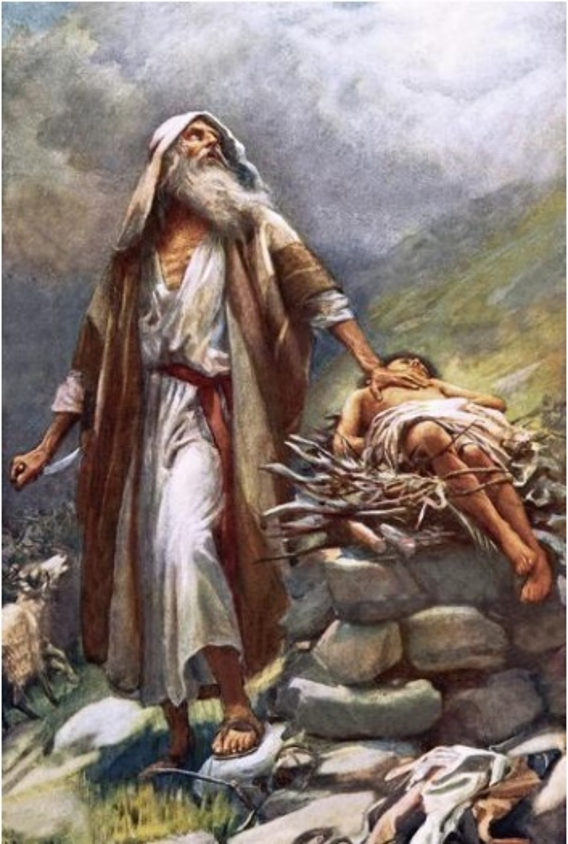
Sacrifice can be a profound moral virtue. But its virtue does not come from obedience. A person may freely sacrifice comfort, wealth, opportunity, even personal safety for another human being or for a cause judged worthy. What gives such sacrifice its moral character is that the sacrifice is the giver's to make and is freely chosen.
The story of Abraham and Isaac exposes the danger of confusing sacrifice with obedience. Abraham is traditionally praised for his willingness to obey God's command even to the point of sacrificing his son. But Isaac's life was not Abraham's possession to sacrifice.
One may sacrifice oneself. One has no comparable moral right to sacrifice another person.
The moral question remains even though Isaac was not ultimately killed: does willingness to perform an otherwise immoral act become virtuous because the actor believes God commanded it? If obedience cannot make an otherwise immoral act moral, then each person remains responsible for judging the morality of one's own actions.
Sacrifice is virtuous when it is freely chosen. Obedience cannot make a sacrifice virtuous that one's own conscience would not choose to make.
Conscience Is Not Merely a Right to Think
Conscience is active. Moral development requires judging, speaking, acting, sometimes being wrong, discovering error, correcting course, and accepting responsibility. The possibility of error is not an argument against conscience; it is part of the condition under which moral growth occurs.
Conscience does not deserve freedom because it is always right. It requires freedom because the individual remains morally responsible even when it is wrong.
Liberty of conscience cannot mean merely the liberty to disagree silently. Conscience must remain free to speak—to other members, in public, in print, and online—without ecclesiastical punishment merely because its conclusions oppose religious authority. Conscience sometimes imposes an affirmative duty to act—especially when a person believes others are being harmed. An institution may answer that person, challenge the evidence, and attempt persuasion. But suppressing conscientious speech is fundamentally different from answering it.
“Nor, on the other hand, is he to be restrained from acting in accordance with his conscience, especially in matters religious.”
“The social nature of man, however, itself requires that he should give external expression to his internal acts of religion.”
— Second Vatican Council, Dignitatis Humanae §3, promulgated by Pope Paul VI (1965)
A conscience that may not speak is no longer free.
Conscientious dissent provides an institution with a safeguard against its own fallibility. Criticism allows errors to be identified, authority to be challenged, and harmful practices to be corrected before obedience protects them from examination.
When Conscience and Institutional Order Collide
The real test of religious liberty occurs not when conscience agrees with authority, but when it reaches a contrary conclusion and insists upon speaking or acting. The consequences become unmistakable when a member publicly contradicts Church leaders or persistently opposes Church teachings or policies. Speech that would ordinarily be protected as an exercise of conscience in American civic life can, within the Church, be classified as ‘apostasy’ and become grounds for Church discipline, including excommunication. The member remains legally free to speak, but the Church reserves the power to impose its most severe ecclesiastical sanction for that speech.
A Church may sincerely describe discipline as pastoral care. Individual leaders may genuinely believe that sanctions are necessary for a person's eternal welfare. Benevolent motive should be acknowledged. But motive does not settle the ethical question.
Calling an exercise of power loving does not establish that the exercise of power is morally justified.
For a believing Latter-day Saint, excommunication can exercise extraordinary leverage. It threatens not merely an abstract status in the next life, but Temple standing, covenant identity, eternal-family expectations, and relationships in the present. A believing spouse may understand the disciplined partner as no longer capable of participating in the eternal marriage upon which the family was built. The resulting conflict can enter the marriage, relationships with children and grandchildren, and the person's entire social world. Religious coercion therefore need not wait for eternity; its consequences can begin at home immediately.
The institution has interests in defining its community. The individual has a moral responsibility to conscience. Neither interest automatically extinguishes the other. The question Temple Temptation asks is why institutional order should possess the superior claim when the two collide.
Excommunication: When Obedience Is Enforced
Agreement between conscience and authority proves little about liberty. Liberty is tested when conscience reaches a contrary conclusion and the member is willing to say so publicly. This is where the Law of Obedience reveals its authoritarian consequence. The member may retain freedom of speech under civil law, but the Church does not necessarily grant comparable freedom within the religious relationship. Publicly following one's conscience against Church authority can place membership, Temple standing, and what the believer understands to be eternal family relationships at risk.
The Temple is not incidental to this authoritarian structure. Its Law of Obedience supplies the religious principle upon which the structure rests: the member has covenanted that obedience to divine authority is a virtue, while Church officers claim authority to speak and act in God's name. When conscientious opposition is subsequently treated as apostasy, the Temple principle has moved from ceremony into institutional enforcement.
Democratic government treats criticism of those who govern as an essential liberty. Authoritarian religious government can instead treat persistent criticism of those who govern as evidence of disloyalty. In Mormonism that disloyalty has a religious name: apostasy.
The price of exercising conscience can therefore be either submission or exclusion.
Sam Young provides a direct example. A former bishop, he publicly campaigned to end closed-door, one-on-one interviews of children and sexually explicit questioning. His 2018 excommunication letter said the issue was not simply his concern or disagreement, but his persistent effort to persuade others by publicly opposing the Church and its leaders. The stated ground was conduct contrary to the 'laws and order of the church.' Whatever one thinks of Young's conclusions, the case demonstrates the point: conscience was tolerated less once it became public advocacy and refused to become silent.
Source: Sam Young disciplinary decision as reported by Deseret News and The Salt Lake Tribune, September 16, 2018.
The case of scholar David P. Wright illustrates the collision in another form. His disciplinary proceedings centered on scholarly conclusions about scripture rather than ordinary personal misconduct. Wright maintained that he could not honestly profess conclusions he did not believe to be true. The documentary record preserved by the Mormon Alliance describes a heavy price paid not only by Wright but by his wife and children. The issue is therefore not abstract: when intellectual honesty conflicts with ecclesiastical authority, institutional discipline can make the family bear part of the cost.
Source: Mormon Alliance, Case Reports, Vol. III, Part 5, Chs. 23–24, including “Pushed Out of My Spiritual and Cultural Home: A Documentary Case Study” and “A Family Church, The Family Disciplinary Council.”
An institution that values obedience above truthful criticism may call dissent disloyalty. But loyalty is not a higher moral virtue than truth. When the two conflict, loyalty must yield.
Truth Does Not Need Protection From Inquiry
Religious certainty—what Mormonism calls “testimony”—is not itself a moral good requiring institutional protection. Truth is the proper objective. A belief worthy of confidence should be able to encounter evidence, criticism, historical investigation, and competing arguments without requiring authority to protect it from examination.
A genuine search for truth must permit the possibility that the proposition being tested is false.
An institution claiming divine authority has an unavoidable conflict of interest when it is simultaneously the claimant, interpreter, beneficiary, and adjudicator of that authority. That conflict does not prove its claims false. It does increase the need for open inquiry.
The question is not whether a Church may teach its own conclusions. Of course it may. The question is whether investigation remains genuinely open-ended when conclusions contrary to institutional claims can become evidence of unfaithfulness.
A truth claim that deserves confidence should not require protection from investigation.
The greater the claim upon another person's life, the greater the burden of demonstrating the authority upon which that claim rests. Before asking a person to make lifelong covenants based upon claimed revelation, an institution has a moral obligation not merely to disclose the words of the covenant, but to deal candidly with evidence a reasonable person might consider material in deciding whether the claimed authority is real.
Can a Religious Covenant Be Irrevocable?
This is deeper than informed consent. Even perfect disclosure cannot make every possible covenant morally legitimate.
Religious growth necessarily involves change. A person may learn at forty what could not have been known at twenty. Evidence changes. Circumstances change. Institutions may be wrong. Leaders may be wrong. The individual may be wrong.
An enduring moral commitment can guide future conduct without extinguishing future judgment. I may commit myself to honesty, fidelity, love, or service and still remain responsible for determining what those principles require in circumstances I cannot foresee.
No religious covenant can morally make the surrender of future judgment irrevocable.
A gift freely renewed remains a gift. Devotion freely renewed remains devotion. But when the Church, as the institution that administered the Temple covenant, says in effect, “Because you gave yourself yesterday, you no longer possess the moral right to reconsider tomorrow,” the gift has become an institutional claim upon one’s life.
Obedience freely reconsidered remains a choice. When the Church treats reconsideration as covenant-breaking or apostasy, obedience has become an enforceable claim to continued submission.
The original exercise of freedom cannot morally become the instrument by which the continuing responsibility to exercise freedom is permanently surrendered.
A Covenant You Cannot Examine Before Making
Only after asking whether the covenant itself is morally legitimate do we reach the separate question of how it is obtained.
A meaningful covenant requires Disclosure. Freedom. Truthfulness.
A person cannot make an informed decision about a Temple obligation unless its material requirements are disclosed before the person makes the decisions that depend upon receiving the Endowment—particularly the decision to serve a mission or to enter a Temple marriage. Disclosure only after family expectations, missionary plans, wedding arrangements, and religious commitments are already in place comes too late for genuinely informed consent. Consent is compromised when refusing carries familial, religious, marital, or social consequences.
Furthermore, consent cannot be genuinely informed when the institution administering the covenant materially misrepresents or withholds information bearing upon the very authority by which it asks the individual to make the covenant. A Church claiming divine authority has a Duty of Candor toward those who rely upon that claim. That duty requires intellectual honesty about its truth claims, ethical conduct consistent with the authority it asserts, and candor about its history—including evidence that could reasonably cause a person to question whether the claimed authority is what the Church represents it to be.
The institution claiming authority cannot also reserve to itself the right to decide which evidence questioning that authority the person asked to submit to it is permitted to know.
The greater the religious authority claimed over another person’s life, the greater the Duty of Candor concerning the foundation of that authority.
My First Temple Experience — April 1962
I entered the Salt Lake Temple immediately before leaving for missionary service. I had completed my missionary farewell. My family and congregation expected me to serve. My identity, reputation, religious future, and relationships were already invested in what was about to happen.
Yet I had not been told before deciding to serve a mission the actual covenants or penalties I would be required to accept. When they were finally presented in the Temple, I could theoretically have stood up and walked out.
In 1962 those penalties were part of the Endowment itself. A contemporary reader who has never encountered them should understand that my reference is historical, not metaphorical.

These penalty gestures were part of the Endowment I received in the Salt Lake Temple in April 1962. They were later removed from the ceremony.
The existence of an exit door is not the same thing as meaningful freedom to use it.
I was being asked to make lifelong religious commitments at the moment when refusing them had become extraordinarily difficult.
Why wasn't I told before I arrived?
Sacredness may justify privacy. It does not justify uninformed consent. And informed consent requires adequate knowledge not only of what I am promising, but of the nature and history of the organization to which I am entrusting religious authority when I make the promise.
Can Today's Covenant Bind Tomorrow's Judgment?
No young adult can know every future family need, financial circumstance, institutional failure, discovery of fact, demand upon conscience, or competing responsibility that will arise at forty, sixty, or eighty.
A lifelong covenant of obedience nevertheless attempts to establish something about those future decisions in advance: I promise today something about how I will exercise judgment tomorrow.
But the moral responsibility does not belong only to the person making the covenant. It belongs also—and perhaps more heavily—to the Church that designed and continues to administer it. Church leaders know that no young adult can foresee the evidence, experience, moral conflicts, institutional failures, or changes of understanding that may arise during an entire lifetime. Yet the Church continues to ask that person to make the covenant as a lifelong obligation.
The defect is therefore not hidden from those who administer the Endowment. The same human limitations that make an irrevocable covenant of Obedience morally dangerous to the participant are available for Church leaders themselves to see. They know that members grow, that circumstances change, that leaders can err, that institutions can err, and that conscience can later reach conclusions different from those held when the covenant was made. Nevertheless, reconsideration can be characterized as covenant-breaking, and persistent public opposition can become apostasy.
The young person is asked to make the lifelong promise before possessing a lifetime of experience. The institution asking for that promise already possesses generations of experience with members who later discover reasons to disagree.
The Church therefore cannot defend the covenant merely by saying, “You freely promised.” It is the institution that formulated the promise, presented it as God’s requirement, accepted the member’s commitment, and continues to claim its authority when the member later reaches a contrary judgment. The moral responsibility for an irrevocable covenant belongs not only to the person induced to make it, but to the institution that knowingly continues to demand it.
A Duty of Candor requires more than disclosing the words of a covenant. It requires candor about how the covenant will be interpreted and enforced when the member later disagrees.
But tomorrow's moral responsibility cannot be discharged today.
A mature commitment can express enduring values. It cannot legitimately extinguish the continuing responsibility to judge how those values apply in circumstances that could not have been known when the promise was made.
Can I make a lifelong promise today that requires me to disregard a contrary judgment of conscience I may reach years from now?
I do not believe I can. My responsibility to exercise conscience tomorrow cannot be surrendered by a covenant I make today. And a Church that knows I cannot foresee tomorrow has no moral right to demand today that I surrender the judgment tomorrow will require.
A promise made yesterday cannot relieve me of responsibility for the choice I make today.
A God of Love Does Not Need Compulsion
Love requires freedom. A person can be forced to comply, frightened into submission, or conditioned into conformity. None of those things is love.
Love can persuade. Love can teach. Love can invite. Love can warn. Love can appeal to reason and conscience. But love must ultimately leave the other person morally free.
A God who requires moral agency cannot require the surrender of moral agency.
No Church becomes exempt from that principle by claiming to represent God. Indeed, the claim to speak for God makes respect for conscience more important, not less.
Conscience Before Obedience
My objection to the Mormon Temple is not an objection to commitment, sacrifice, fidelity, service, community, or religious devotion. Those things can be deeply moral when freely chosen.
My objection is to reversing their proper moral order.
- An institution must earn trust through Candor about its truth claims, history, and conduct before asking for obedience.
- One must first judge the morality of one’s own conduct; a Covenant to Obey cannot make that judgment for us.
- A Church request must respect the individual's right to decline without requiring justification.
- All Temple Covenants must remain open to reconsideration as knowledge, circumstances, and conscience develop.
- Religious authority must remain subject to the judgment of the individual upon whom that authority is exercised.
- Conscientious dissent must be answered with evidence and persuasion rather than silenced by authority.
A request does not become God's request merely because the person making it believes himself inspired.
The answer to authoritarian religion is not disobedience for its own sake. It is moral adulthood. We listen. We consider. We learn. We allow others to influence us profoundly. We remain open to discovering that we are mistaken. But we retain responsibility for what we finally choose to do.
Authority may persuade. Conscience must decide.
And conscience must remain free to act upon its decision.
Where conscience finds no wrong, the direction of one's life remains one's own.
--- The End ---
Rights to Reproduce and Use
(c) 2026 Francis Nelson Henderson. All rights
reserved.
I encourage the use of this work for purposes of
scholarship, education, criticism, and personal study. This document may be
quoted, excerpted, or shared in whole or in part for non-commercial
purposes, provided that proper attribution is given to the author and the
integrity of the original meaning is preserved.
This work is not offered for commercial use
without the author's prior written permission.
Images are used on the basis of ownership,
permission or license, public-domain status, or, where applicable, fair use
for purposes such as criticism, commentary, scholarship, and education under
17 U.S.C. 107
Some images may be AI-generated from text
descriptions or sketches and are illustrative rather than documentary.
Disclaimer: Images are used to support and
illustrate my analysis. The original creators' intent may differ from the
interpretive use presented here.
Notice Regarding Terminology and Affiliation
This document is a personal statement of
religious history, opinion, and commentary. It is not affiliated with or
endorsed by The Church of Jesus Christ of Latter-day Saints.
The terms "LDS," "Mormon," and "Mormonism" are
used in their common historical and descriptive sense.
Temple Temptations site pdf copy here.
https://www.temple-temptations.com/
Exit Statement of
Francis Nelson Henderson